

Deuteronomy
Chapter
28
Vers. 15 - 68
Deuteronomy 28
Proves African Americans (Negroes)
are the true children of Israel
are the true children of Israel
The Shocking Truth About African Americans
Hosea 4:6 My people are destroyed for lack of knowledge:
 |  |  |  |
Spreading the Word
A Father of the Internet
Our Challenge: We will publicly debate any "Bible Theologian" on the curses
of Deuteronomy 28 to determine which group of people fit these curses!
of Deuteronomy 28 to determine which group of people fit these curses!

The True Name Of God (Yah)
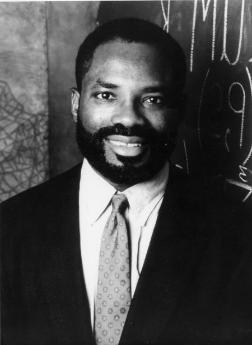
Philip Emeagwali
Philip Emeagwali has been called one of the "fathers of the
Internet," alongside pioneers such as Tim Berners-Lee and Vint
Cerf.
Internet," alongside pioneers such as Tim Berners-Lee and Vint
Cerf.
In 1989, he programmed more than 65,000 processors to
perform the world's fastest computation: 3.1 billion calculations
per second.
perform the world's fastest computation: 3.1 billion calculations
per second.
The feat smashed the previous record and proved that a
network of small computers could outperform more powerful,
expensive supercomputers.
network of small computers could outperform more powerful,
expensive supercomputers.
(Today's fastest supercomputers can perform well over a
trillion calculations per second.)
trillion calculations per second.)
Born in Nigeria, West Africa young Philip was recognized early as a math prodigy. His father drilled him to
solve 100 problems an hour to help pass school entrance exams. But at the age of 12, civil war forced him to
drop out and he was conscripted into the Biafran army. He earned a high-school diploma through
self-teaching and won a math scholarship to the United States. See African Math.
solve 100 problems an hour to help pass school entrance exams. But at the age of 12, civil war forced him to
drop out and he was conscripted into the Biafran army. He earned a high-school diploma through
self-teaching and won a math scholarship to the United States. See African Math.
Emeagwali reformulated Newton’s Second Law of Motion as 18
equations and algorithms; then as 24 million algebraic
equations; and finally he programmed and executed those
equations on 65,000 processors at a speed of 3.1 billion
calculations per second.
equations and algorithms; then as 24 million algebraic
equations; and finally he programmed and executed those
equations on 65,000 processors at a speed of 3.1 billion
calculations per second.
Emeagwali's 65,000 processors, 24 million equations and 3.1
billion calculations were three world records that
garnered international headlines
billion calculations were three world records that
garnered international headlines
He has since earned several degrees ,
including a PhD in scientific computing,
and delved into fields such as
oceanography, weather forecasting
and oil exploration.
In recent years, Mr. Emeagwali, now
50, has used his knowledge of
supercomputers to develop a theory of
the Internet's evolution.
Mr. Emeagwali has also distinguished
himself for his stand on social issues,
such as the effects of colonization on
Africa and the ongoing "brain drain" of
promising African scholars to the West.
including a PhD in scientific computing,
and delved into fields such as
oceanography, weather forecasting
and oil exploration.
In recent years, Mr. Emeagwali, now
50, has used his knowledge of
supercomputers to develop a theory of
the Internet's evolution.
Mr. Emeagwali has also distinguished
himself for his stand on social issues,
such as the effects of colonization on
Africa and the ongoing "brain drain" of
promising African scholars to the West.
"I'm a black scientist and an African scientist. So when I became prominent, I tried to use that voice, said
Mr. Emeagwali, who runs a consulting firm in Washington, D.C., and speaks regularly around the world.
"But I've tried to keep it a scientific voice."
Mr. Emeagwali, who runs a consulting firm in Washington, D.C., and speaks regularly around the world.
"But I've tried to keep it a scientific voice."
He believes technology has the potential to correct some of the world's inequalities.
"If the Internet and telecommunications break down the barriers of space and time, it means somebody in
Africa or India, could be employed in the United States or Canada."
"If the Internet and telecommunications break down the barriers of space and time, it means somebody in
Africa or India, could be employed in the United States or Canada."
Supercomputer scientist Philip Emeagwali speaks about how
high speed data cables can connect Africa.
high speed data cables can connect Africa.